
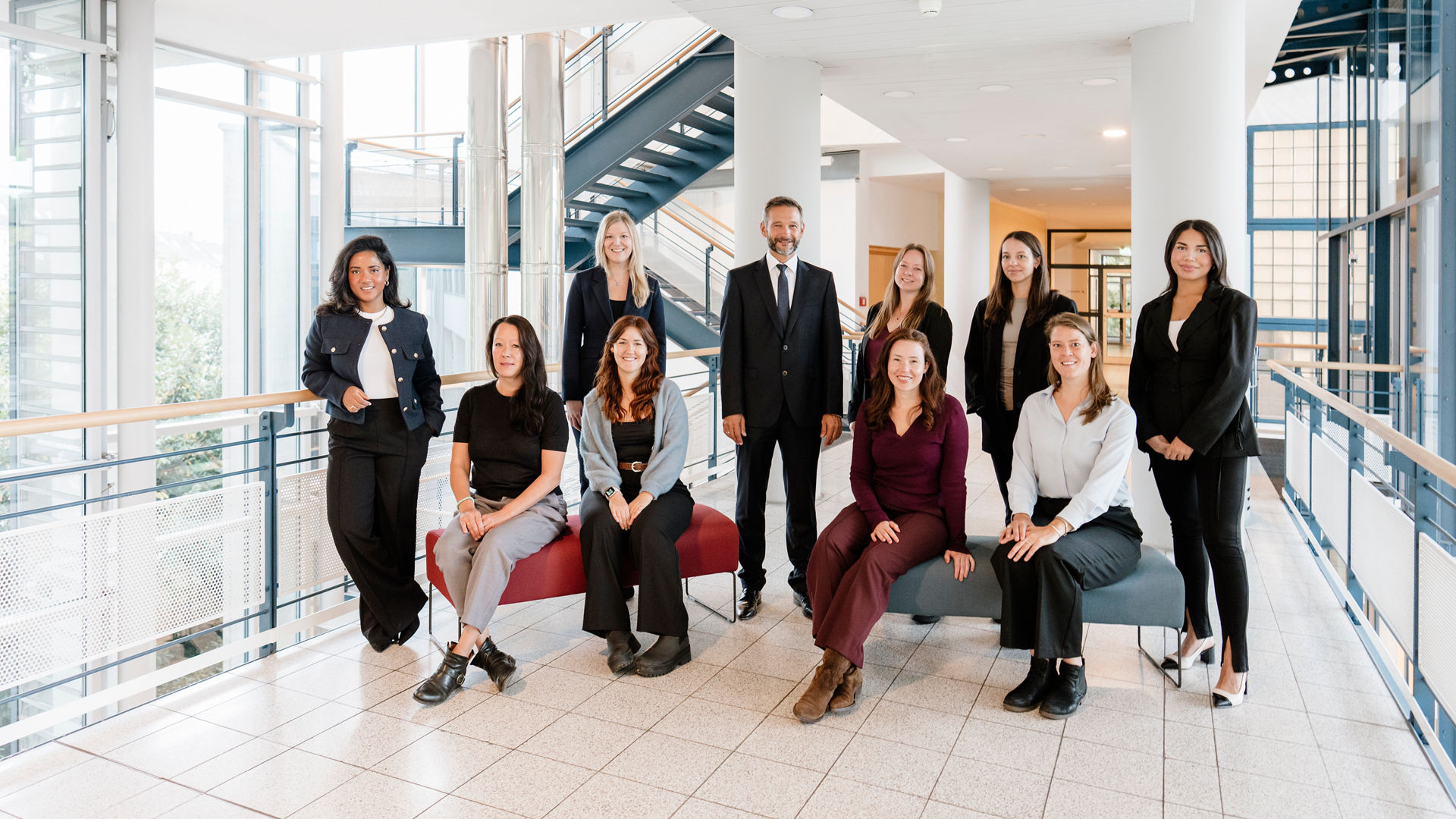

Professor Dr. Kammann, what is your role in the international programmes at FOM?
As International Study Programme Director my role is mainly centred on acamedic and cultural onboarding in regard to first semester students and overall long-term quality assurance for all study programmes. I support our students at the beginning of their studies, but I also assign all lecturers and focus on quality assurance measures across all programmes and study semesters. Staying in continuous dialogue with students and teaching staff helps to ensure that the programmes deliver what they promise. For me, a strong start begins with support, structure and trust.
What do you teach?
I mainly teach in the soft skills area and work with almost all first-semester groups. This allows me to get to know students early on and introduce them to the FOM study system. My courses include Scientific Working Methods, Intercultural Competence, German, Scientific Writing, as well as Time and Self-Management and Resilience.
Why are these subjects especially important for international students?
Because students need to develop two things at the same time: academic competence and intercultural competence. They should quickly understand the requirements of studying here in Germany, but they also need to acculturate in a new country with a new cultural environment. That is exactly what I see as the purpose of onboarding in the first semester.
How would you describe your teaching approach?
I do not see my role as simply delivering knowledge. Of course, students need structure, theory and clear academic expectations. But beyond that, I want them to engage, reflect and apply what they learn in regard to their individual career goals. In my classes, we move into discussion quite quickly, and I ask students to position themselves, relate content to their own experiences and think about practical solutions.
What kind of atmosphere do you want to create in class?
I want students to feel that they are part of a learning community. That includes academic commitment, but also openness, exchange and trust. In my experience, students benefit when teaching is not limited to formal content but also creates a sense of belonging and shared development.
What makes FOM a preferred choice for international students?
One important point is reliability. We make clear commitments, and we keep them. What we communicate in terms of service and support is what students can expect. Our programmes are confirmed half a year in advance and are all 100% in-class teaching programmes that are conducted on our FOM campuses. That level of consistency matters, especially for students coming from abroad.
Students need to develop two things at the same time: academic competence and intercultural competence.

International Study Programme Director
What advantages does FOM offer beyond the classroom?
FOM is strongly connected to various industries across Germany and beyond. Through our lecturers, connections to local chambers of commerce, national associations and wider networks, students gain valuable access to the labour market in Germany and its EU neighbours. I see that as a major advantage, because it gives students real opportunities to connect their studies with future career paths.
What is your overall goal for international students at FOM?
Our shared goal is that students look back on their time with us as one of the best periods of their lives. They should work hard, build strong skills, livelong friendships and develop personally, but they should also enjoy the experience. That is what we are working towards in the international programmes.
About Prof. Dr Christian Kammann
Prof. Dr Christian Kammann has been part of FOM since 2007. After working in product management and contributing to the development of master’s programmes, he moved into the International Office, where he helped establish FOM’s international programmes. Today, he supports students especially in the early phase of their studies and teaches primarily in the first semester. As International Study Programme Director his focus areas include academic programme quality management and student development.